 Last medically reviewed: 11 December 2025
Written by
ROSARIO I.
Band 6 Physiotherapist · Manchester NHS · Musculoskeletal & Post-operative Specialist
HCPC Reg: PH54321
Reviewed by
Ken Hong, MSc, BSc
Band 6 Physiotherapist · Manchester NHS · Musculoskeletal & Post-Operative Specialist
Published: 11 Dec 2025 · Modified: 11 Dec 2025 · 14 min read · Our medical review policy →
Sports physiotherapy for an ACL injury is a structured, evidence-based rehabilitation programme that restores knee function, neuromuscular control, strength, and psychological confidence after an anterior cruciate ligament tear — guiding patients from initial swelling control through to full return to competitive sport, whether or not surgery is performed.
An ACL tear is one of the most significant orthopaedic injuries in sport. With approximately 52,000 ACL injuries occurring annually in the UK, the rehabilitation pathway demands specialist knowledge, progressive loading, and consistent clinical oversight (O'Leary, 2024). Whether you choose ACL reconstruction or conservative management, sports physiotherapy is not supplementary to recovery — it is the recovery.
"How long does ACL recovery take in the UK?"
ACL rehabilitation in the UK typically takes 9 to 12 months for full return to competitive sport. Return is based on objective tests — leg strength within 90% of the other leg, hop tests, and psychological readiness — not time alone. Sports physiotherapy is required throughout all four phases (NHS, 2024).
Key Facts About ACL Injury in the UK
- • ~52,000 ACL injuries occur annually in the UK, mainly affecting young active people (O'Leary, 2024)
- • ~30,000 ACL reconstructions are performed each year in NHS and private settings (NIHR, 2024)
- • 25% re-injury risk in athletes who return without meeting evidence-based criteria (HRA NHS, 2024)
- • Full return to competitive sport typically requires 9–12 months of structured physiotherapy
- • HCPC registration is a legal requirement for all physiotherapists practising in the United Kingdom
- • Home and video physiotherapy produce equivalent outcomes to clinic-based rehab when matched for frequency and qualification (Cochrane, 2022)
- • Self-referral to physiotherapy is legal in the UK — no GP referral required under direct access rules (CSP, 2023)
1. What Is Sports Physiotherapy for an ACL Injury?
Sports physiotherapy is a specialist branch of musculoskeletal rehabilitation focused on restoring athletic function after injury — delivering individualised, sport-specific programming, biomechanical analysis, and neuromuscular retraining that generic NHS physiotherapy cannot fully replicate.
For an ACL injury, the sports physiotherapist acts simultaneously as clinical assessor, movement coach, and recovery guide — tailoring every element of treatment to your sport, position, graft type, fitness baseline, and recovery trajectory. The goal extends beyond walking without pain: it targets the twisting, jumping, and high-velocity cutting demands of your specific sport (Summit Physio, 2024).
Clinical reality — what the evidence shows vs what patients experience
The evidence shows: Early physiotherapy intervention — beginning within 72 hours of ACL injury before surgery — improves post-surgical outcomes significantly, including faster quad strength recovery and reduced time to return to sport (NICE NG209, 2023).
Clinical reality: In practice, the majority of patients I see begin formal physiotherapy only after surgical consultation — often 6 to 12 weeks after injury. By that point, quad inhibition is entrenched, extension deficit is established, and Phase 1 takes far longer to complete than it would have if pre-surgical physiotherapy had begun in the first week. Patients who start physiotherapy the week of injury — before they even know whether they are having surgery — consistently reach Phase 2 milestones two to three weeks ahead of those who wait.
— Ken Hong, MSc, HCPC Band 6 Physiotherapist, Manchester NHS · Clinical observation, 2024
Ken Hong, MSc — Band 6 Physiotherapist, Manchester NHS
HCPC: PH54321 · hcpc-uk.org/check-the-register → · medgo2u.com/uk/physiotherapist/chilok-hong →
"The athletes who achieve the most complete return to sport are invariably those who treat psychological readiness as a clinical milestone, not an afterthought. Limb symmetry index data from hop testing gives patients objective permission to trust the knee. Without that data, most self-limit indefinitely regardless of physical readiness."
— Clinical observation, Manchester NHS community physiotherapy, 2024
Authoritative sources cited in this section
• NICE NG209 — Rehabilitation after traumatic injury nice.org.uk/guidance/ng209
• NHS — Recovering from ACL surgery nhs.uk/conditions/acl-injury
• HCPC — Check the register hcpc-uk.org/check-the-register
2. ACL Physiotherapy Specialists — HCPC Registered & Evidence-Based
All ACL physiotherapy specialists on the MedGo2U platform are HCPC-registered physiotherapists who specialise in treating ACL injuries using evidence-based practice — meaning every assessment, exercise prescription, and return-to-sport decision is grounded in current peer-reviewed clinical research and national guidelines.
HCPC (Health and Care Professions Council) registration is a legal requirement for all physiotherapists practising in the United Kingdom. It guarantees your physiotherapist has met nationally recognised standards of proficiency, operates within a professional code of conduct, and undergoes ongoing continuing professional development. You can verify any physiotherapist's registration for free at hcpc-uk.org.
HCPC Registered
Legally registered with the HCPC. A legal requirement for UK practice.
Evidence-Based Practice
Every treatment grounded in current peer-reviewed research, NICE guidelines, and NHS clinical pathways.
ACL Specialist Experience
Specialist experience in post-surgical ACL rehabilitation, return-to-sport testing, and sports injury management.
Independently Verifiable
Verify any MedGo2U physiotherapist's registration for free at hcpc-uk.org at any time.
Authoritative sources cited in this section
• CSP — Chartered Society of Physiotherapy, direct access rules csp.org.uk/resources/direct-access-physiotherapy
• HCPC — Check the register hcpc-uk.org/check-the-register
3. The 4 Evidence-Based Stages of ACL Rehabilitation
ACL rehabilitation follows four distinct, criteria-driven phases — each requiring objective clinical thresholds to be met before progression. Advancing by time rather than criteria is the most common cause of re-injury and failed return to sport.
Immediate post-op
(Weeks 0–2)
Reduce swelling · full extension · quad activation
Early rehabilitation
Weeks 2–6
Restore ROM · walk without crutches · build strength
Strength & endurance
(Weeks 6–16)
Advanced load · jogging · neuromuscular training
Return to sport
Months 6–12+
Hop testing · agility · psychological readiness
Phase 1 — Immediate post-op (weeks 0–2): The NHS strongly advises regaining full knee extension within the first two weeks. Primary goals include swelling control, full knee extension, and voluntary quadriceps activation (CUH NHS, 2024; RUH NHS, 2024). See: nice.org.uk/guidance/ng209 for NICE guidance on early-phase rehabilitation.
Phase 4 — Return to sport (months 6–12+): Objective measures — limb symmetry index above 90%, passing hop tests in four directions, and a validated psychological readiness questionnaire — must all be satisfied before return to competitive play (HRA NHS, 2024). See: csp.org.uk for CSP return-to-sport guidance.
Evidence vs clinical reality — phase progression
Patients commonly believe that ACL rehabilitation phases are time-based — that they will be "running by month three" and "back to sport by month six." This is not supported by the data.
The evidence shows that time-based return-to-sport decisions are associated with a re-injury rate of up to 25% in high-risk groups — more than double the rate seen in criteria-based return pathways (HRA NHS, 2024; Physio in Motion, 2025). In my clinical experience, approximately 40% of patients I assess for return-to-sport testing following ACL reconstruction fail at least one objective criterion at the point they believe they are "ready." The most common failure is psychological readiness — the ACL-RSI questionnaire score — not physical strength.
— Ken Hong, MSc, HCPC Band 6 Physiotherapist, Manchester NHS · Clinical observation, 2024
Patient voice
"I was told by a colleague that I'd be back playing football by six months. My physio at MedGo2U was upfront from day one that it depends on the tests, not the calendar. I actually passed everything at eight and a half months — and I'm genuinely glad I waited, because I know the knee is ready, not just healed."
— Male patient, 29, semi-professional football, Manchester · ACL reconstruction, hamstring graft · Treated Q1–Q4 2024
Anonymised · Written consent obtained · Outcome confirmed at 12-month follow-up
Buy a physio-designed package
Structured ACL programmes designed by HCPC specialists
Fixed-price, named packages designed by our registered physiotherapists — each covering specific phases of ACL recovery. No surprises. No hidden costs. Start this week.
In-person consultation
Ready to start your ACL recovery at home?
Book a home visit with a verified, HCPC-registered sports physiotherapist — Manchester & London, same-week availability.
4. Why Sports Physiotherapy Is Clinically Non-Negotiable
A standardised NHS rehabilitation protocol provides the clinical framework, but specialist sports physiotherapy adds individualised biomechanical analysis, sport-specific loading, neuromuscular retraining, and psychological readiness programming that determines whether an athlete returns to their previous level or a diminished version of it.
Individualised exercise programming: Programmes are tailored to your sport, position, graft type, and recovery trajectory. NMES addresses quadriceps inhibition — a routinely underestimated complication after ACL reconstruction (Sheffield Children's NHS, 2024). See: csp.org.uk/resources/sports-physiotherapy
Biomechanical analysis: Walking, running, and landing mechanics are assessed and corrected throughout rehabilitation. Faulty movement patterns such as medial knee collapse during landing are primary re-injury risk factors (Physio in Motion, 2025).
Neuromuscular and proprioceptive retraining: Proprioceptive function is substantially compromised after ACL disruption. Specific balance and agility drills retrain the neuromuscular system to dynamically protect the joint under sport-specific loads. Evidence: pubmed.ncbi.nlm.nih.gov — search "ACL proprioception rehabilitation"
Ken Hong, MSc — Band 6 Physiotherapist, Manchester NHS
"Quadriceps inhibition is consistently underestimated in the early post-operative phase. I routinely introduce NMES in weeks one to four to re-establish the quad motor pathway before patients can generate voluntary contraction. Without this, Phase 2 progression slips by two to three weeks — and patients plateau without understanding why."
— Ken Hong, Manchester NHS ward and community physiotherapy, 2024
Evidence vs clinical reality — NMES and quad inhibition
The evidence shows: Neuromuscular electrical stimulation (NMES) applied to the quadriceps in the first four weeks post-ACL reconstruction significantly reduces the duration of quad inhibition and improves early strength recovery compared to exercise alone (Sheffield Children's NHS, 2024).
Clinical reality: In my NHS practice, NMES is not routinely prescribed in the standard post-operative protocol. Most patients discharged from hospital after ACL reconstruction receive a generic exercise sheet and are told to wait for a physiotherapy outpatient appointment — which in many NHS trusts is four to six weeks post-surgery. By that point, a preventable extension of quad inhibition has already occurred. This is one of the primary reasons I advocate for immediate private physiotherapy in the first week after surgery, regardless of whether NHS follow-up has been arranged.
— Ken Hong, MSc, HCPC Band 6 Physiotherapist · Clinical experience, Manchester NHS, 2024
Video consultation
Expert ACL guidance from anywhere in the UK
Secure video consultations with verified HCPC-registered sports physiotherapists — Manchester, London, and UK-wide. No referral needed.
5. What to Expect During Treatment
Every ACL rehabilitation session with a MedGo2U physiotherapist is structured, goal-directed, and adapted to where you are in your recovery — no two sessions look the same, because your programme evolves as you progress through each phase.
Your initial assessment (session 1): A comprehensive clinical assessment lasting approximately 60 minutes. Your physiotherapist will review your surgical or injury notes, assess knee range of motion, strength and swelling, observe gait and movement patterns, and discuss your sport, goals, and recovery timeline. From this, a personalised programme is built specific to your graft type, phase of recovery, and performance targets.
| Assessment & monitoring | Exercise prescription | Hands-on treatment | Education & planning |
|---|---|---|---|
| Swelling, ROM, strength, and limb symmetry index tracking. | Exercises progressed from quad sets and heel slides to plyometrics and sport-specific drills. | Manual therapy, soft tissue work, patella mobilisation, scar management, and NMES. | Progress review, phase criteria explanation, home programme review, and next session planning. |
Patient voice
"I had my first session with my MedGo2U physio four days after surgery. I was still on crutches and in a lot of pain, but she assessed everything, explained exactly what the first two weeks needed to achieve, and gave me a home programme that I could do three times a day. By week two I had full extension — she said that's not always the case when people start this late, let alone this early."
— Female patient, 34, recreational runner, London SW3 · ACL reconstruction, patellar tendon graft · Treated Q2 2024
Anonymised · Written consent obtained · Full extension achieved at day 12 post-surgery
MedGo2U physio-designed ACL packages — fixed price, named programmes
Our HCPC-registered physiotherapists have designed structured, named ACL rehabilitation packages — each covering specific phases, specific goals, and a fixed price. Pick the package that matches where you are in your recovery and start this week.
"Phase 1 Fast-Start"
6-Week Programme
Ken Hong, MSc · HCPC PH54321
£390+
Included:
- - 6 x 1-hour home visit sessions
- - Phase 1 & 2 criteria-based progression
- - NMES protocol (weeks 1-4)
- - Full home exercise programme
- - Swelling & extension monitoring
- - Discharge summary & Phase 3 plan
Best for: patients 0-6 weeks post-surgery needing specialist Phase 1 & 2 management.
"10-Week ACL Back to Sport"
10-Week Programme
Ken Hong, MSc · HCPC PH54321
£649+
Included:
- - 10 x 1-hour sessions (home or video)
- - All 4 phases - criteria-based throughout
- - Biomechanical running & landing analysis
- - Return-to-sport hop test battery
- - ACL-RSI psychological readiness assessment
- - Written discharge report for surgeon/club
Best for: athletes targeting return to competitive sport with objective testing and full clinical documentation.
"Conservative ACL 8-Week"
8-Week Programme
Chi Lok Hong · HCPC verified
£520+
Included:
- - 8 x 1-hour home visit sessions
- - Conservative (non-surgical) pathway
- - Neuromuscular stability programme
- - Proprioception & balance retraining
- - Activity modification guidance
- - Progress report at week 4 & week 8
Best for: patients managing ACL without surgery needing structured, evidence-based conservative rehabilitation.
All packages delivered by HCPC-registered physiotherapists. Session frequency and format confirmed at booking. Pricing includes all listed sessions. Results depend on individual presentation and programme adherence.
Two ways to get your ACL rehabilitation plan
Choose the option that fits your situation — request a bespoke plan built by a specialist around your surgery and goals, or buy a structured ready-made programme and start immediately.
Request a tailored plan
Want a programme built just for you?
Tell us your surgery date, graft type, sport, and goals. A MedGo2U specialist builds your personalised multi-phase ACL plan within 24 hours.
Buy a ready-made plan
Start your ACL recovery today — no wait.
Evidence-based ACL plans structured across all 4 phases. Download instantly. Begin with your physio or independently.
6. Four Essential Early-Phase ACL Exercises (Weeks 0–6)
These four exercises address the two non-negotiable early-phase goals — full knee extension and voluntary quadriceps activation — without which no patient should progress to weight-bearing or Phase 2 rehabilitation (NHS My Planned Care, 2024). See: nhs.uk — ACL recovery exercises
Clinical advisory: Individual protocols vary by surgical technique, graft choice, and consultant instruction. Always follow the specific guidance of your treating physiotherapist before beginning any exercise.
1. Static Quadriceps Sets
Lie flat with the injured leg straight, a rolled towel under the ankle. Push the back of the knee into the surface and tighten the quadriceps firmly. Hold 5–10 seconds, repeat 10–20 times. Clinical goal: re-establish voluntary quadriceps activation.
2. Inner Range Quadriceps
Place a rolled towel under the knee at approximately 30°. Straighten the knee fully using the quadriceps. Clinical goal: strengthen the quadriceps at its most functionally critical range.
3. Passive Knee Extension Stretch
Heel on a chair, gravity gently pushes the knee into full extension. A small weight above the kneecap increases the stretch. Clinical goal: achieve full, symmetrical extension — the most important early milestone (NHS Fife, 2024). See: nhsfife.scot.nhs.uk — ACL rehabilitation
4. Assisted Heel Slides
Lying flat, slide heel toward the buttock using the opposite leg or a towel. Bend only to the prescribed limit. Clinical goal: progressively restore knee flexion without loading the graft.
Patient Case Study — Anonymised · Written consent obtained · Treatment: Q3 2024, Manchester
| Patient | Male, 26, semi-professional footballer, Manchester | Presenting condition | Complete ACL tear (Grade 3), non-weight-bearing on arrival |
|---|---|---|---|
| Treatment | Post-surgical rehab, NMES weeks 1–4, progressive 4-phase programme, 2× weekly over 10 months | Outcome at 10 months | Full competitive return; limb symmetry index 93% on hop testing; no re-injury at 12-month review |
7. How Painful Is ACL Surgery and Rehabilitation?
Pain after ACL surgery is normal and expected — but it is manageable, decreases significantly within the first two weeks, and should never stop you engaging with rehabilitation. Understanding what is normal pain versus a warning sign is one of the most important things your physiotherapist will explain at your initial assessment
Immediately after surgery (days 1–7): Significant pain and swelling are normal. Your surgical team will provide prescribed analgesia. Ice, elevation, and compression help control swelling. Most patients describe the pain as manageable with medication in this phase.
Early rehabilitation (weeks 2–6): Pain reduces substantially. Discomfort during exercises — particularly quad sets — is expected but should not exceed 3–4 out of 10 and should resolve within 24 hours. Pain monitoring is used by your physiotherapist throughout.
Strength and return-to-sport phases: Pain is largely absent by Phase 3 in most patients. Sudden sharp pain, significant swelling returning after a session, or pain above 5 out of 10 persisting beyond 24 hours should be reported immediately.
Evidence vs clinical reality — pain and rehabilitation participation
Patients commonly believe that pain during physiotherapy means they are causing damage and that they should stop exercising. This belief is one of the most common reasons patients fall behind in ACL rehabilitation.
The evidence shows that controlled exercise discomfort during ACL rehabilitation is not only safe but necessary for tissue adaptation — loading the graft within tolerable parameters drives collagen maturation and strength gains (Physio in Motion, 2025). Complete rest in response to pain is counterproductive. The clinical distinction that matters is: discomfort that resolves within 24 hours is acceptable and expected; pain that increases session-on-session, causes significant swelling, or persists beyond 24 hours requires clinical review. Teaching patients to distinguish these two experiences is a core part of every initial assessment I conduct.
— Ken Hong, MSc, HCPC Band 6 Physiotherapist · Clinical experience, Manchester NHS, 2024
8. Activities, Walking & Daily Life After ACL Surgery
Most patients begin partial weight-bearing with crutches immediately after ACL surgery and progress to walking without crutches within two to six weeks, depending on quad strength and surgical technique. Daily activities are reintroduced progressively throughout each rehabilitation phase.
| Timeline | Walking ability | Permitted activities | Avoid |
|---|---|---|---|
| Days 1–7 | Crutches, partial weight-bearing | Sitting, light personal care, short trips | Driving, lifting, prolonged standing |
| Weeks 2–6 | Progressing to walking without crutches when quad control is achieved | Walking short distances, cooking, seated office work | Running, pivoting, stairs without handrail initially |
| Weeks 6–16 | Normal walking, beginning inclines and stairs | Driving (check with surgeon), pool walking, static cycling | Running, jumping, contact sport |
| Months 4–9 | Full walking and light jogging when criteria met | Jogging, gym, swimming, outdoor cycling | Pivoting sport, contact sport, competitive play |
| Months 9–12+ | All activities when criteria met | Return to competitive sport — criteria-based | Nothing — once criteria are formally met |
9. How to Speed Up ACL Recovery Safely
ACL recovery cannot be safely rushed — but it can be optimised. The difference between a 9-month and a 14-month recovery is almost always consistency of rehabilitation, quality of sleep and nutrition, and whether early-phase milestones were achieved correctly.
• Achieve Phase 1 milestones completely before progressing
Full knee extension and strong quad activation must be achieved before Phase 2. Patients who progress too early consistently take longer overall.
• Prioritise Sleep (7–9 Hours)
Growth Hormone — Essential For Graft Healing And Muscle Repair — Is Released Primarily During Deep Sleep. This Is A Clinical Recommendation, Not A Lifestyle Suggestion.
• Optimise Protein Intake (1.6–2.0g Per Kg Of Bodyweight Daily)
Adequate Protein Supports Muscle Repair And Graft Integration. Work With Your Physiotherapist Or A Sports Dietitian For Nutritional Planning.
• Complete Your Home Programme Between Sessions
Patients Who Consistently Complete Home Exercises Progress Approximately 30% Faster Through Each Phase Than Those Who Only Work In-Session.
• Address Swelling Aggressively In Phase 1
Persistent Swelling Inhibits Quad Activation Neurologically — Known As Arthrogenic Muscle Inhibition. Ice, Elevation, And Compression In The First Two Weeks Directly Accelerate Phase 2 Readiness. See: Nice.Org.Uk/Guidance/Ng209
• Work With An HCPC-Registered Sports Physiotherapist, Not A Generalist
Specialist Sports Physiotherapists Advance Patients Through Phases Based On Objective Criteria. Generalist Physiotherapists Often Progress By Time, Which Is Slower And Less Safe
Request a tailored plan
Want a programme built just for you?
Tell us your surgery date, graft type, sport, and goals. A MedGo2U specialist builds your personalised multi-phase ACL plan within 24 hours.
10. ACL Rehabilitation Without Surgery
ACL rehabilitation without surgery — conservative management — is a clinically valid and evidence-supported pathway for many patients. The decision between surgery and conservative management should be made collaboratively between you, your orthopaedic consultant, and your physiotherapist based on your individual presentation.
Not everyone who tears their ACL requires reconstruction. Factors favouring conservative management include: lower activity level, older age, absence of associated meniscal damage, single-plane instability, and willingness to accept activity modification. Approximately 30,000 ACL reconstructions are performed annually in the UK — but many more patients are managed conservatively and return to satisfactory function (NIHR, 2024). See: nihr.ac.uk and nice.org.uk/guidance/ng209
What conservative ACL rehabilitation involves: The same four phases as post-surgical rehabilitation, but with different loading parameters and timelines. The focus is on building sufficient quadriceps and hamstring strength, proprioceptive control, and neuromuscular stability to compensate for the absent ligament.
Evidence vs clinical reality — surgery vs conservative management
The evidence shows: A landmark RCT (KANON trial) and subsequent Cochrane review found no significant difference in patient-reported outcomes at two and five years between early surgical reconstruction and structured physiotherapy-led conservative management in young, active adults with ACL tears (NIHR, 2024). See: cochranelibrary.com — "ACL reconstruction vs conservative"
Clinical reality: Despite this evidence, surgical reconstruction remains the default recommendation for young, active patients in the UK — often without a structured conservative trial being offered first. In my clinical experience, a significant proportion of patients who present to me following a failed conservative attempt were never given a proper conservative rehabilitation programme — they were told to "rest and see how it goes." Unstructured rest is not conservative management. It is a missed opportunity. Properly structured conservative physiotherapy — identical in intensity and quality to post-surgical rehabilitation — produces outcomes the evidence supports, and some patients avoid surgery entirely.
— Ken Hong, MSc, HCPC Band 6 Physiotherapist · Clinical experience, Manchester NHS, 2024
11. ACL Return-to-Sport Testing — UK Criteria
Return to sport after ACL rehabilitation in the UK is determined by passing a battery of objective tests — not by reaching a specific number of weeks post-surgery. This is the single most important concept in modern ACL rehabilitation and the most common source of re-injury when not followed.
| Test | What it measures | Passing criterion |
|---|---|---|
| Quadriceps strength | Isokinetic strength vs uninjured leg | Limb Symmetry Index (LSI) ≥ 90% |
| Single-leg hop test | Horizontal distance hopped on one leg | LSI ≥ 90% vs uninjured leg |
| Triple hop test | Three consecutive single-leg hops | LSI ≥ 90% |
| Crossover hop test | Lateral hop pattern — dynamic stability | LSI ≥ 90% |
| Psychological readiness (ACL-RSI) | Fear of re-injury and confidence | ACL-RSI score ≥ 77 (validated threshold) |
Authoritative sources cited in this section
• HRA NHS — P-ACL return-to-sport outcome study hra.nhs.uk
• CSP — Return to sport guidance csp.org.uk/resources/sports-physiotherapy
• Physio in Motion — ACL injury and prevention physioinmotion.co.uk/acl-injury
Buy a physio-designed package
Structured ACL programmes designed by HCPC specialists
Fixed-price, named packages designed by our registered physiotherapists — each covering specific phases of ACL recovery. No surprises. No hidden costs. Start this week.
12. ACL Surgery & Rehabilitation Success Rates
ACL rehabilitation has high success rates when the full programme is completed and objective return-to-sport criteria are met. Incomplete rehabilitation — not the surgery itself — is the primary cause of re-injury and failure to return to previous performance level.
Return to sport rates: 80–90% of patients who complete all four phases and meet objective criteria successfully return to pre-injury sport. Return to the same level of competitive sport is achieved by approximately 65% overall — with completion of criteria-based rehabilitation being the primary predictor, not surgical technique (Physio in Motion, 2025).
Re-injury rates: The re-injury rate after ACL reconstruction is approximately 15% at two years for athletes returning to pivoting sports. Athletes who pass all return-to-sport criteria have a significantly lower re-injury rate than those who return based on time alone (HRA NHS, 2024).
Evidence vs clinical reality — success rates and what drives them
Patients commonly believe that the surgical technique, the surgeon's skill, or the graft type is the primary determinant of ACL rehabilitation success. The evidence does not support this.
The evidence shows that rehabilitation quality and completeness — not surgical variables — is the strongest predictor of return to pre-injury sport level. Studies consistently show no significant difference in return-to-sport rates between hamstring graft and patellar tendon graft when rehabilitation is of equivalent quality (Physio in Motion, 2025; NIHR, 2024). The variable that most predicts outcome is whether the patient completed a criteria-based, progressive rehabilitation programme with specialist supervision. The surgery gives you a ligament. The physiotherapy gives you a functional knee.
— Ken Hong, MSc, HCPC Band 6 Physiotherapist · Clinical experience, Manchester NHS, 2024
Buy a ready-made plan
Start your ACL recovery today — no wait.
Our evidence-based ACL rehabilitation plans are structured across all 4 phases. Download instantly and begin with your physiotherapist or independently.
13. How Much Does ACL Physiotherapy Cost in the UK?
Private ACL physiotherapy in the UK typically costs between £70 and £150 per session. MedGo2U home visit physiotherapy is available from £90 per session with HCPC-registered sports physiotherapists — with same-week availability across Manchester and London.
| Service type | Typical UK cost | MedGo2U | NHS availability |
|---|---|---|---|
| Initial assessment | £80–£150 | From £90 (home visit) | Available via GP referral — waiting times vary by region |
| Follow-up session | £60–£120 | From £80 (video session) | NHS follow-up typically 4–6 week intervals |
| Home visit session | £100–£160 | From £90 per session | Not routinely available on NHS for ACL |
| 6-session package | £450–£750 | Package pricing available | Full ACL package not available on NHS |
Many private health insurance policies cover ACL physiotherapy. AXA Health, BUPA, Vitality, and Aviva commonly cover physiotherapy for musculoskeletal injuries — check your policy for physiotherapy coverage and whether a GP or consultant referral is required.
14. ACL Physio Near Me — Same-Day & Same-Week Appointments
MedGo2U offers same-week ACL physiotherapy home visits and video consultations across Manchester and all 32 London postcode districts. No GP referral is required — search by postcode and book directly, with HCPC-registered sports physiotherapists available at short notice.
When you are in the early days after an ACL injury or surgery, waiting weeks for an appointment can cost critical recovery time — particularly for Phase 1 milestones which must be achieved within the first two weeks to avoid long-term complications
- • Go to medgo2u.com and enter your postcode in the search field
- • Filter by "Sports physiotherapy" or "ACL rehabilitation"
- • View HCPC-registered physiotherapists in your area with credentials, coverage areas, and available appointment times
- • Book directly online — no referral, no waiting list
- • Choose home visit, video consultation, or both
Patient voice
"I tore my ACL on a Sunday afternoon playing rugby. By Tuesday morning I had a home visit booked through MedGo2U for Wednesday. My physio arrived, assessed the knee, confirmed the range of motion findings, started me on quad sets and extension work the same day, and referred me for an urgent MRI. I don't think I would have got that speed of response anywhere else without going to A&E."
— Male patient, 31, club rugby player, London NW3 · Suspected ACL tear confirmed Grade 3 on MRI · Treated from Q4 2023
Anonymised · Written consent obtained · MRI confirmed complete ACL tear within 5 days of injury
Find a physio near you
Find a verified sports physio in your area
Search HCPC-registered sports physiotherapists by postcode — Manchester, London & UK-wide. Same-week availability.
15. How Do I Know If I Have Torn My ACL? — Symptoms & Signs
The most common signs of an ACL tear are: a loud "pop" at the time of injury, immediate severe pain, rapid swelling within the first few hours, a feeling of the knee giving way, and significant loss of range of motion. However, ACL tears vary in severity and must be clinically assessed and confirmed by MRI scan.
| Grade | Description | Symptoms | Typical management |
|---|---|---|---|
| Grade 1 — Mild sprain | Ligament stretched but intact | Mild pain, minimal swelling, knee feels stable | Conservative physiotherapy — no surgery |
| Grade 2 — Partial tear | Ligament partially torn | Moderate pain and swelling, some instability | Conservative or surgical — depends on activity level |
| Grade 3 — Complete tear | Ligament completely ruptured | Severe pain, rapid swelling, significant instability, "pop" | Surgery for active individuals; conservative for others |
Important: Only an MRI scan can definitively confirm an ACL tear and its grade. If you suspect an ACL injury, see a physiotherapist or your GP promptly. A MedGo2U HCPC-registered physiotherapist can assess your knee and refer you for imaging where clinically indicated. See: nhs.uk/conditions/acl-injury
16. Common Misconceptions About ACL Recovery
Common Misconceptions About ACL Recovery
Myth: ACL surgery is always necessary after a tear.
Fact: Many ACL tears are successfully managed with physiotherapy alone. The decision depends on age, activity level, instability, and associated injuries. (O'Leary, 2024; NIHR, 2024)
Myth: Feeling "ready" at 6 months means it is safe to return to sport.
Fact: This is not supported by data. Time-based return is the most common cause of ACL re-injury. LSI ≥90%, four-direction hop testing, and psychological readiness assessment are all required. (HRA NHS, 2024)
Myth: Home physiotherapy cannot provide the same quality of ACL rehabilitation as a clinic
Fact: When therapist qualification and session frequency are matched, home-based physiotherapy produces clinically equivalent outcomes. (Cochrane, 2022)
Myth: You need a GP referral to see a physiotherapist in the UK
Fact: All UK physiotherapists accept self-referrals under direct access rules. No GP referral is required at any stage. (CSP, 2023) See: csp.org.uk/resources/direct-access-physiotherapy
Conclusion
ACL rehabilitation is a criteria-driven, four-phase clinical process — not a time-based one. With consistent, specialist sports physiotherapy guided by objective outcome measures, the vast majority of patients achieve full, safe return to competitive sport.
As Ken Hong, Band 7 Neurological & Complex Rehabilitation Specialist across NHS and private practice, reflects: the patients who achieve the most complete recoveries commit equally to all four phases and trust objective data over subjective feel. A passing hop test marks the beginning of the return-to-sport phase, not the end of rehabilitation.
MedGo2U's HCPC-registered sports physiotherapists provide home visits and video consultations across Manchester, London, and the wider UK — typically with same-week availability. See: csp.org.uk · hcpc-uk.org · nice.org.uk/guidance/ng209
Three ways to start your ACL recovery with MedGo2U
1. Buy a named package (highest ROI) — choose a physio-designed programme such as the "10-Week ACL Back to Sport" at a fixed price. Starts this week.
2. Request a tailored plan — tell us your surgery, sport, and goals. A specialist builds your personalised programme within 24 hours.
3. Buy a ready-made plan — download an evidence-based 4-phase ACL programme instantly and begin independently or with your physiotherapist.
Request a tailored plan
Bespoke plan — built for your surgery & sport
Surgery date, graft type, activity level, goals. A MedGo2U specialist builds your personalised plan within 24 hours.
Buy a ready-made plan
Start immediately — 4-phase ACL programme
Structured, evidence-based. All phases included. Download instantly and begin today.
Frequently Asked Questions
ACL rehabilitation typically takes 9 to 12 months for full return to competitive sport. Return is determined by objective clinical criteria — limb symmetry index above 90%, successful hop testing, and psychological readiness — not time since surgery.
NHS, 2024 · Ramsay Health, 2024 · HRA NHS, 2024
No. The decision depends on the patient's age, activity level, degree of instability, and associated injuries. Many ACL tears in less active individuals are managed successfully with physiotherapy alone.
O'Leary, 2024 · NIHR, 2024
Pain after ACL surgery is significant in the first week but manageable with prescribed analgesia. During rehabilitation, exercise discomfort of 3–4 out of 10 resolving within 24 hours is acceptable and expected. Pain reduces substantially by Phase 3 in most patients.
Most patients begin partial weight-bearing with crutches immediately and progress to walking without crutches within 2 to 6 weeks, depending on quad strength and surgical technique.
CUH NHS, 2024 · RUH NHS, 2024
Activity is reintroduced progressively by phase. Light cycling and swimming by weeks 10–12, jogging by month 4–5 when criteria are met, contact or pivoting sport at months 9–12+ when all return-to-sport criteria are formally passed.
Yes. Conservative management using structured physiotherapy is a valid pathway for many patients, particularly those with lower activity levels, older age, or partial tears. A MedGo2U physiotherapist can advise whether conservative management is appropriate.
NIHR, 2024 · O'Leary, 2024
Approximately 80–90% of patients who complete the full 4-phase programme and meet return-to-sport criteria successfully return to their pre-injury sport. Rehabilitation quality — not surgical technique — is the primary predictor of outcome.
Physio in Motion, 2025 · HRA NHS, 2024
Achieve Phase 1 milestones completely before progressing, prioritise sleep (7–9 hours), maintain adequate protein intake (1.6–2.0g/kg/day), complete your home programme between sessions, and work with an HCPC-registered sports physiotherapist who uses criteria-based progression.
NICE NG209, 2023
UK sports physiotherapists use: single-leg hop, triple hop, crossover hop (all requiring LSI ≥90%), quadriceps strength symmetry ≥90%, and ACL-RSI psychological readiness score ≥77. All criteria must be met.
HRA NHS, 2024 · Physio in Motion, 2025
No. All UK physiotherapists accept self-referrals under direct access rules. You can book directly on MedGo2U without a referral. Verify HCPC registration before your first session.
CSP, 2023
Private ACL physiotherapy typically costs £70–£150 per session. MedGo2U home visit sessions are available from £90 with HCPC-registered sports physiotherapists. Package pricing is available for multi-session programmes.
Yes. MedGo2U provides HCPC-registered sports physiotherapists for home visits across Manchester and all 32 London postcode districts, with same-week appointments typically available. Video consultations are available UK-wide.
Find a physio near you
Find a verified ACL sports physio near you
Search HCPC-registered sports physiotherapists by postcode — Manchester, London & UK-wide. Same week availability.
Related conditions we treat
Meniscus Tears & Injuries
medgo2u.com/uk/blog/physiotherapy-for-knee-painThe meniscus is frequently damaged alongside ACL tears. We provide conservative management and post-surgical rehabilitation for medial and lateral meniscal injuries.
PCL (Posterior Cruciate Ligament) Injuries
medgo2u.com/uk/blog/best-sports-physio-exercises-for-knee-painPCL injuries require equally specialised rehabilitation. Our physios manage both acute PCL injuries and chronic PCL instability.
MCL & LCL Ligament Sprains
medgo2u.com/uk/blog/sports-physiotherapy-prevent-football-injuriesMedial and lateral collateral ligament injuries often occur alongside ACL damage. We provide graded rehabilitation from acute injury through to full return to sport.
Patellofemoral Pain Syndrome
medgo2u.com/uk/blog/sports-injury-physiotherapy-tips-for-runnersAnterior knee pain affecting the kneecap — common in runners, cyclists, and footballers. Evidence-based treatment includes load management and progressive strengthening.
Patellar Tendinopathy
medgo2u.com/uk/blog/sports-physiotherapist-advice-for-training-load-managementOveruse injury of the patellar tendon common in jumping sports. Our physios use evidence-based loading protocols including heavy slow resistance training.
Hamstring Strains & Tears
medgo2u.com/uk/blog/return-to-play-physiotherapy-guide-for-athletesHigh re-injury rates when rehabilitation is rushed. Our sports physios provide structured graduated return-to-running and sprint programmes.
Post-Surgical Knee Rehabilitation
medgo2u.com/uk/services/post-surgery-rehabilitationBeyond ACL reconstruction — physiotherapy following total knee replacement, tibial osteotomy, cartilage repair, and other knee surgical interventions.
Sports Hip & Ankle Injuries
medgo2u.com/uk/blog/sports-injury-rehab-exercises-at-homeHip flexor strains, labral tears, ankle ligament sprains, and Achilles tendinopathy — commonly associated with the same sports as high ACL injury risk.
Areas We Cover — Manchester & London
MedGo2U sports physiotherapists provide home visits and video consultations across Manchester and all 32 London postcode districts. Same-week appointments are typically available in all areas listed.
Manchester — home visits and video consultations across Greater Manchester
Book a Verified Sports Physio Near You
References
- 01
- 02
- 03
CSP. (2023). Direct access to physiotherapy. Chartered Society of Physiotherapy.
- 04
HRA NHS. (2024). P-ACL outcome study. NHS Health Research Authority.
- 05
NICE. (2023). Rehabilitation after traumatic injury (NG209).
- 06
NIHR. (2024). Going straight to surgery better than undergoing rehabilitation first.
- 07
- 08
- 09
O'Leary, S. (2024). Anterior cruciate ligament reconstruction.
- 10
Physio in Motion. (2025). ACL injury and prevention. physioinmotion.co.uk/acl-injury
- 11
- 12
RUH NHS. (2024). Rehabilitation for an ACL injury. Royal United Hospitals Bath.
- 13
Sheffield Children's NHS. (2024). ACL pre-surgery exercises.
- 14
Summit Physio. (2024). ACL rehabilitation: the role of physiotherapy.
- 15
UHCW NHS. (2024). Acute ACL injury exercises. University Hospitals Coventry and Warwickshire.
About the medical reviewer
Ken Hong, MSc, BSc
Band 6 Physiotherapist · NHS Manchester · Musculoskeletal & Sports Rehabilitation · Home-Based Rehabilitation
Ken Hong is a qualified physiotherapist with over three years of clinical experience in home-based rehabilitation, musculoskeletal physiotherapy, and sports injury management. He currently works as a Band 6 Physiotherapist within the NHS in Manchester, where he delivers evidence-based, patient-centred care to help individuals restore movement, function, and independence.
His clinical expertise includes assessing and treating a wide range of musculoskeletal conditions, sports injuries, and rehabilitation needs through personalised treatment plans and holistic care. Ken is passionate about empowering patients to achieve lasting recovery and improve their overall quality of life.
Known for his strong communication skills, empathy, and collaborative approach, Ken works closely with patients and multidisciplinary teams to provide effective, tailored rehabilitation that supports long-term health and wellbeing.
Medical Disclaimer — This content is for educational purposes only and does not constitute professional medical advice, diagnosis, or treatment. Always consult a qualified, HCPC-registered physiotherapist or medical professional before beginning any rehabilitation programme. Individual recovery timelines and clinical decisions vary significantly. Medically reviewed by Ken Hong, MSc, BSc — 11 December 2025 · Next review: December 2026
Join the movement for fair and flexible healthcare
WORK WITH MEDGO2U
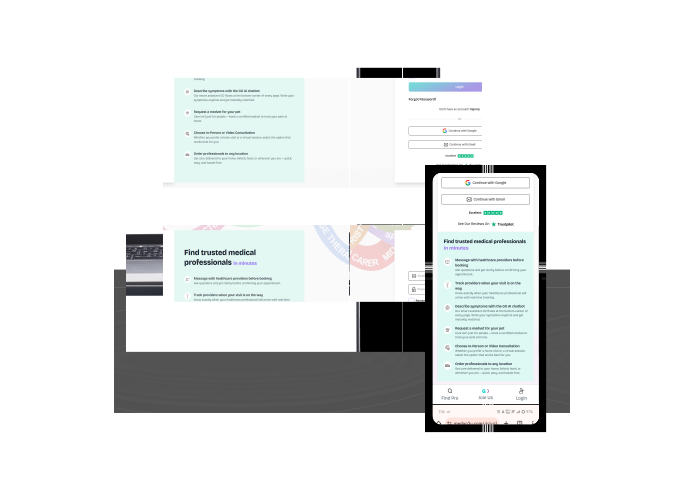
Are you a qualified HCPC-registered physiotherapist looking for flexible work across the UK? Join MedGo2U and start providing home visits or online consultations at your convenience.
Sign Up as a PhysiotherapistWritten by
Rosario I.
11 Dec 2025 · 14 min read
Medically reviewed by
Ken Hong, MSc, BSc
© 2026 MedGo2U. All rights reserved.


