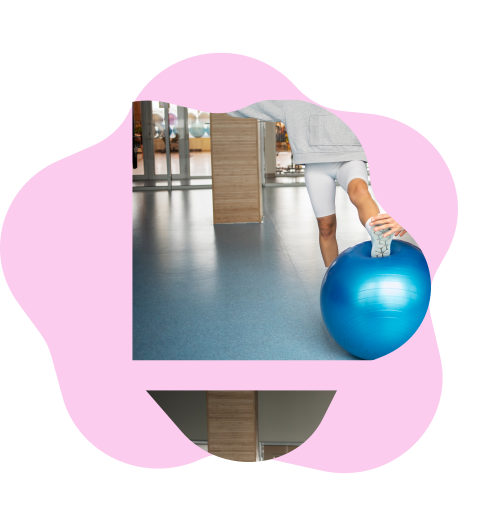
Balance and coordination problems are common after neurological conditions such as stroke, Parkinson's disease, multiple sclerosis, traumatic brain injury, and spinal cord injury. These difficulties can affect walking, standing, reaching, and everyday activities, often increasing the risk of falls and loss of independence.
Neuro rehabilitation focuses on retraining the nervous system through structured, repetitive, and goal-oriented exercises. Balance and coordination exercises play a central role in this process, helping patients regain control, confidence, and functional movement.
This blog explains the best balance and coordination exercises used in neuro rehabilitation, why they matter, and how they support recovery when guided by a trained neuro physiotherapist.
By: MedGo2U Editorial Team
Medically Reviewed by: Ken Hong
Reviewed on: Jan 9, 2026
Date Published: Jan 9, 2026
Date Modified: Jan 9, 2026
Why Balance and Coordination Are Important in Neuro Rehabilitation
Balance allows the body to stay upright and stable, while coordination enables smooth and accurate movement. Neurological damage can interrupt signals between the brain and muscles, leading to:
- Unsteady posture
- Poor trunk control
- Slow or inaccurate movements
- Difficulty walking or turning
- Increased fall risk
Neuro physiotherapy uses targeted exercises to activate neuroplasticity, helping the brain form new pathways and improve movement control over time.
Key Benefits of Balance and Coordination Training
Consistent balance and coordination exercises can help neuro rehabilitation patients:
- Improve postural stability
- Reduce fall risk
- Enhance walking ability
- Increase independence in daily activities
- Improve confidence and movement awareness
- Support long-term functional recovery
Research shows that task-specific balance training improves functional mobility and reduces falls in neurological populations (Shumway-Cook et al., 2023).
Best Balance Exercises for Neuro Rehabilitation
1. Seated Balance Training
Often used in early rehabilitation stages. Examples:
- Sitting without back support
- Shifting weight side to side
- Reaching forward or sideways while seated
- Sitting on unstable surfaces under supervision
Why it helps: Improves trunk stability and prepares patients for standing activities.
2. Static Standing Balance Exercises
Performed once the patient can stand safely. Examples:
- Standing with feet hip-width apart
- Narrow stance standing
- Semi-tandem and tandem stance
- Standing with support nearby
Why it helps: Builds postural control and confidence in upright positions.
3. Single-Leg Balance (Supported)
Performed with a stable surface nearby. Progressions include:
- Reducing hand support
- Increasing hold time
- Adding gentle head movements
Why it helps: Strengthens lower limbs and improves balance reactions.
4. Weight Transfer Exercises
Shifting weight forward, backward, and sideways. Why it helps: Improves dynamic balance and prepares patients for walking and transfers.
Best Coordination Exercises for Neuro Rehabilitation
1. Upper Limb Coordination Exercises
- Reaching for targets
- Alternating hand movements
- Finger-to-nose activities
Benefits: Improves precision, control, and hand-eye coordination.
2. Lower Limb Coordination Exercises
- Heel-to-shin movement
- Controlled leg lifts
- Alternating foot tapping
Benefits: Enhances movement accuracy and timing.
3. Marching and Stepping Exercises
- Marching in place
- Stepping forward and sideways
- Controlled step placement
Benefits: Improves gait rhythm and coordination.
4. Ball-Based Coordination Activities
- Catching and throwing
- Rolling a ball with hands or feet
Benefits: Enhances reaction time and bilateral coordination.
Dynamic Balance and Functional Training
1. Walking Practice
- Walking on flat and uneven surfaces
- Changing walking speed
- Practicing turns
2. Obstacle Navigation
- Stepping over objects
- Directional changes
3. Dual-Task Exercises
- Walking while carrying an object
- Simple cognitive tasks combined with movement
These activities help prepare patients for real-life environments.
Conclusion
Balance and coordination exercises are essential components of neuro rehabilitation. With consistent practice and professional guidance, patients can improve stability, movement control, and independence. A personalized neuro physiotherapy program ensures exercises remain safe, effective, and aligned with recovery goals.
If you're looking for a qualified physiotherapist in London, book an appointment with Parth V., a verified HCPC-registered physiotherapist offering home and video consultations across the city.
Frequently Asked Questions
Who needs balance and coordination exercises?
Anyone recovering from a neurological condition affecting movement, balance, or control can benefit.
Can these exercises be done at home?
Some exercises can be done at home, but they should be prescribed and supervised initially by a neuro physiotherapist.
How often should balance exercises be performed?
Frequency depends on the condition and stage of recovery, but consistency is key.
Do balance exercises help prevent falls?
Yes, regular balance training significantly reduces fall risk.
Join the movement for fair and flexible healthcare
WORK WITH MEDGO2U
Are you a qualified HCPC-registered physiotherapist looking for flexible work across London or the UK? Join MedGo2U and start providing specialist home visits or online consultations at your convenience.
References
- World Health Organization. Neurological Rehabilitation Guidelines.
- Shumway-Cook A, Woollacott M. Motor Control and Balance in Neurological Conditions, 2023.
- Parkinson's Foundation. Balance and Movement Therapy.
About the Reviewer
Ken Hong is a Band 6 Physiotherapist working within the Manchester NHS across both ward and community settings. He holds a BSc in Sport and Exercise Science and an MSc in Physiotherapy (Pre-registration) from the University of Birmingham. Ken has strong clinical experience in assessing, diagnosing and treating a wide range of musculoskeletal and post-operative conditions. His background in exercise science enhances his ability to design effective, evidence-based rehabilitation programmes that improve mobility, strength and overall recovery.
Medical Disclaimer
This content is for educational purposes only and is not a substitute for professional medical advice, diagnosis, or treatment. Always consult a qualified healthcare professional before starting any rehabilitation program.
Last medically reviewed on: Jan 9, 2026
Follow us to hear more



Ionela Marinau
Jan 9, 2026 • 10 minutes read