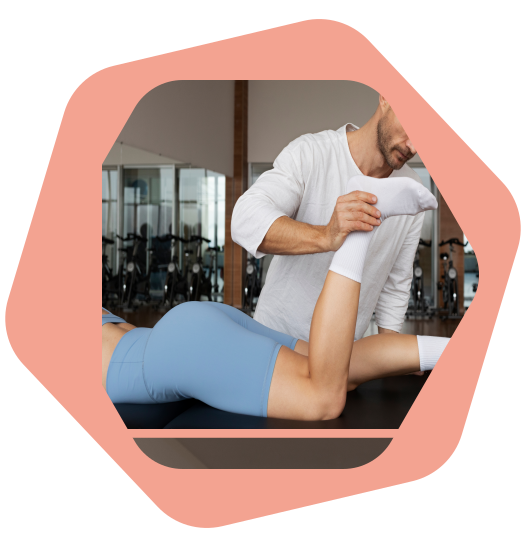
Knee pain is one of the most common problems faced by athletes and active individuals. Whether caused by running, football, gym training, or sudden changes in activity level, knee pain can limit performance and daily movement. Sports physiotherapy plays a key role in managing knee pain by strengthening supporting muscles, improving joint stability, and restoring proper movement patterns.
This blog explains the best sports physiotherapy exercises for knee pain and how they help reduce discomfort, improve strength, and prevent future injuries.
By: MedGo2U Editorial Team
Medically Reviewed by: Ken Hong
Reviewed on:
Date Published:
Date Modified:
Understanding Knee Pain in Sports
The knee joint absorbs significant force during sports activities such as running, jumping, cutting, and landing. Repeated stress, muscle imbalance, poor technique, or inadequate recovery can lead to knee pain.
Common causes of sports-related knee pain include:
- Patellofemoral pain (runner's knee)
- Ligament strain
- Tendon overload
- Muscle weakness
- Poor hip or ankle control
Research shows that targeted strengthening and movement correction significantly reduce knee pain and improve function in athletes (Barton et al., 2015).
Why Sports Physiotherapy Exercises Matter
Sports physiotherapy does not only focus on the knee itself. It addresses the entire movement chain, including hips, thighs, calves, and core muscles.
Benefits of sports physio exercises include:
- Reduced knee pain
- Improved joint stability
- Better movement control
- Lower injury risk
- Improved sports performance
Well-designed exercise programs restore balance and protect the knee during high-impact activities.
Best Sports Physio Exercises for Knee Pain
1. Quadriceps Strengthening (Straight Leg Raises)
The quadriceps support knee alignment and shock absorption.
How it helps:
- Improves knee stability
- Reduces stress on the kneecap
This exercise is commonly prescribed for runner's knees and post-injury recovery.
2. Hamstring Strengthening
Strong hamstrings balance the forces around the knee joint.
Examples include:
- Hamstring curls
- Bridge exercises
Hamstring strengthening reduces strain on knee ligaments and improves control during running and jumping.
3. Glute Strengthening (Glute Bridges & Clamshells)
Weak glutes often contribute to poor knee alignment.
Why it matters:
- Improves hip control
- Reduces inward knee collapse
Studies show that hip strengthening reduces knee pain in athletes (Barton et al., 2015).
4. Step-Ups and Step-Downs
This functional exercise mimics real-life and sports movements.
Benefits:
- Improves knee control
- Builds strength for stairs, running, and jumping
Physiotherapists often use step exercises to retrain movement patterns.
5. Squats (Modified and Progressed)
Squats strengthen multiple muscle groups that support the knee.
Physio focus:
- Proper knee alignment
- Controlled movement
When done correctly, squats improve knee load tolerance and performance.
6. Lunges
Lunges strengthen the quadriceps, hamstrings, and glutes.
Why physiotherapists recommend them:
- Improve single-leg strength
- Enhance balance and coordination
Lunges are progressed gradually based on pain levels.
7. Calf Strengthening
Calf muscles help absorb impact during running and jumping.
Benefits:
- Reduces stress on the knee
- Improves ankle-knee coordination
Strong calves support efficient movement mechanics.
8. Balance and Proprioception Exercises
Balance exercises improve joint awareness and control.
Examples include:
- Single-leg standing
- Balance board exercises
Balance training reduces knee injury risk in sports (McGuine & Keene, 2006).
How Often Should You Do Knee Physio Exercises?
Most sports physiotherapy programs recommend:
- 2–4 sessions per week
- Gradual progression
- Pain-guided exercise selection
Consistency is key for long-term improvement.
Common Mistakes to Avoid
- Ignoring pain signals
- Progressing exercises too quickly
- Poor technique
- Skipping recovery days
Physiotherapist guidance ensures safe and effective exercise progression.
Home and Virtual Sports Physiotherapy for Knee Pain
Home and virtual physiotherapy sessions allow athletes to receive professional guidance without travel.
Benefits include:
- Exercise supervision
- Technique correction
- Progress tracking
Research supports virtual physiotherapy for musculoskeletal rehabilitation (Cottrell et al., 2017).
When to See a Sports Physiotherapist
You should consult a physiotherapist if:
- Knee pain lasts more than a few days
- Pain worsens during activity
- Swelling or instability occurs
- You have a history of knee injuries
Early intervention prevents long-term damage.
Conclusion
Sports physiotherapy exercises are one of the most effective ways to manage knee pain and prevent future injuries. By strengthening key muscle groups, improving balance, and correcting movement patterns, athletes can return to sport safely and confidently. Working with a qualified sports physiotherapist ensures exercises are tailored to your needs and goals.
If you're looking for a qualified physiotherapist in London, book an appointment with Parth V., a verified HCPC-registered physiotherapist offering home and video consultations across the city.
Frequently Asked Questions
Can exercises really help knee pain?
Yes. Targeted strengthening and movement exercises significantly reduce knee pain.
Should I stop sports during knee pain?
Not always. Modified activity with physiotherapist guidance is often recommended.
How long does it take to see improvement?
Many people notice improvement within a few weeks of consistent exercise.
Are virtual physiotherapy sessions effective?
Yes. They provide guided exercises and professional supervision.

Join the movement for fair and flexible healthcare
WORK WITH MEDGO2U
Are you a qualified HCPC-registered physiotherapist looking for flexible work across London or the UK? Join MedGo2U and start providing specialist home visits or online consultations at your convenience.
References
- Barton CJ et al. (2015). Hip and knee strengthening for knee pain. Sports Medicine.
- Lauersen JB et al. (2014). Strength training and injury prevention. British Journal of Sports Medicine.
- McGuine TA & Keene JS. (2006). Balance training and knee injury prevention. Clinical Journal of Sport Medicine.
- Cottrell MA et al. (2017). Effectiveness of telerehabilitation. Journal of Telemedicine and Telecare.
About the Reviewer
Ken Hong is a Band 6 Physiotherapist working within the Manchester NHS across both ward and community settings. He holds a BSc in Sport and Exercise Science and an MSc in Physiotherapy (Pre-registration) from the University of Birmingham. Ken has strong clinical experience in assessing, diagnosing and treating a wide range of musculoskeletal and post-operative conditions. His background in exercise science enhances his ability to design effective, evidence-based rehabilitation programmes that improve mobility, strength and overall recovery.
Medical Disclaimer
This content is for educational purposes only and does not replace professional medical advice. Always consult a qualified healthcare professional for diagnosis and treatment.
Last medically reviewed on: Dec 29, 2025
Follow us to hear more



Ionela Marinau
Dec 29, 2025 • 10 minutes read