What Causes Sciatica and How Does Physiotherapy Help?
Sciatica is not a diagnosis itself but a symptom of an underlying problem irritating the sciatic nerve, the longest and thickest nerve in the body. The most common cause is a herniated (or "slipped") disc in the lumbar spine, which presses on the nerve root. Less commonly, it can be caused by spinal stenosis or Piriformis Syndrome (NHS, 2024).
Physiotherapy is crucial because it promotes healing and resolves nerve irritation through active interventions:
- Decompression: Specific movements and positions help reduce the pressure on the nerve root caused by a bulging disc.
- Strengthening: Building strength in the core, hips, and lower back stabilises the spine, minimizing future stress on the discs.
- Flexibility & Mobility: Improving the flexibility of tight muscles (like the hamstrings and piriformis) that can contribute to nerve compression.
Evidence shows that active exercise programs, guided by a physiotherapist, are significantly more effective than passive treatments or bed rest for persistent sciatica (Journal of Orthopaedic & Sports Physical Therapy, 2023).
Best Stretches and Nerve Glides for Sciatica Relief
These exercises are central to physiotherapy and aim to free up the trapped nerve and reduce muscle tension. Always perform these gently, and stop immediately if they increase your shooting leg pain.
1. Nerve Glides (Sciatic Nerve Flossing)
- Goal: To gently move the sciatic nerve through its pathway to reduce sensitivity and stiffness without stretching it.
- How: Sit on a firm chair with good posture. Keep your affected leg bent. Slowly extend your knee while simultaneously looking up toward the ceiling. Then, bend your knee back while tucking your chin to your chest. Repeat the smooth, gentle "floss" 10-15 times. Research indicates nerve gliding exercises are highly effective in reducing pain and improving function (Spine Universe, 2022).
2. Prone Press-Ups (McKenzie Method)
- Goal: To help push disc material away from the nerve root, relieving pressure, especially for pain originating from the lumbar spine.
- How: Lie on your stomach. Place your hands flat on the floor beneath your shoulders (like a push-up start). Keeping your hips relaxed and on the floor, gently press your chest up, lifting only your upper back. Go only as high as you feel comfortable, or until your leg pain centralizes (moves closer to the spine). Hold for 5 seconds and lower. Repeat 10 times.
3. Piriformis Muscle Stretch
- Goal: To stretch the piriformis muscle, which runs deep in the buttock and can sometimes compress the sciatic nerve (Piriformis Syndrome).
- How: Lie on your back with knees bent. Cross the ankle of the painful leg over the opposite knee (forming a figure-four). Gently pull the non-painful knee toward your chest until you feel a stretch in the buttock of the affected leg. Hold for 30 seconds. Repeat 3 times.
Other Physiotherapy Treatments
While exercise is key, a physiotherapist employs several other techniques to manage your condition:
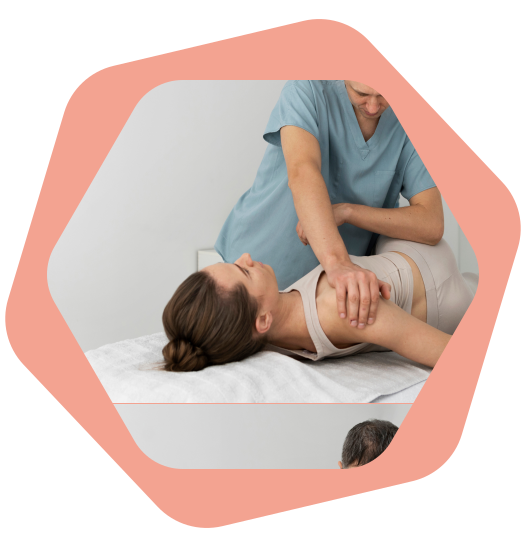
- Manual Therapy: Hands-on techniques, including soft tissue massage, joint mobilization, and spinal manipulation (where appropriate), to reduce muscle tension, improve spinal mobility, and provide immediate pain relief (Physio Works, 2024).
- Posture and Ergonomics Education: Assessing and correcting poor sitting, standing, and lifting habits that contribute to disc pressure. This is a crucial element for long-term prevention.
- Pain Management Techniques: Using TENS (Transcutaneous Electrical Nerve Stimulation) or heat/ice therapy as supportive measures to control nerve discomfort while you progress through the active exercises.
When to Seek Help and Safety Tips
Do not wait for sciatica to resolve on its own. Early intervention from a physiotherapist leads to faster and more complete recovery (Health Services Research, 2018).
- Keep Moving: Avoid prolonged sitting or bed rest. Walking short distances is often beneficial as it promotes blood flow and keeps the spine mobile.
- Avoid Aggravating Positions: For most disc-related sciatica, bending forward (flexion) tends to worsen the pain, especially when sitting or lifting. Try to maintain a slight arch in your lower back when sitting or standing.
- Red Flags: Seek immediate medical attention (A&E/GP) if you experience any of the following, which may indicate a serious condition (cauda equina syndrome):
- Sudden bilateral (both legs) weakness or numbness.
- Inability to control your bladder or bowels.
- Numbness in the saddle area (inner thighs, groin, or around the rectum).
Conclusion
Physiotherapy is the clear leader in the treatment of sciatica. By combining targeted nerve gliding, powerful decompressive exercises (like press-ups), and essential strengthening of the supportive musculature, a physiotherapist gives you the tools to not only overcome the severe pain but also to address the mechanical imbalances that caused it. Choose an active, structured approach to reclaim your movement and live free from nerve pain.
If you're looking for a physiotherapist in London, book an appointment with Parth V., a verified HCPC-registered physiotherapist offering home and video consultations across the city.
Frequently Asked Questions
Is walking good or bad for sciatica?
Generally, walking is good for sciatica. Gentle, short walks help maintain spinal mobility, strengthen supporting muscles, and stimulate circulation. However, if walking significantly increases the shooting pain down your leg, reduce the distance and focus on lying down or standing exercises instead.
What is the fastest way to get rid of sciatica?
There is no single "fastest" fix, as recovery takes time. The quickest and most reliable path involves early, active intervention under the guidance of a physiotherapist. This means starting nerve glides and pain-relieving movements immediately to reduce nerve irritation, rather than waiting for it to spontaneously resolve.
Should I stretch my hamstrings if I have sciatica?
Be cautious. While hamstring tightness can contribute to back issues, if your sciatica is severe, forceful hamstring stretching can sometimes pull on the irritated nerve and worsen the symptoms. A physiotherapist will often recommend nerve gliding (flossing) first, before introducing gentle, pain-free stretching as the nerve irritation decreases.
Ready to Book a Professional?
Stop living with debilitating nerve pain. Connect with a verified physiotherapist experienced in spinal health and sciatica management for a personalized recovery plan.
References
- NHS. (2024). Sciatica.
- Journal of Orthopaedic & Sports Physical Therapy. (2023). Effectiveness of Physiotherapy for Sciatica.
- Spine Universe. (2022). Nerve Glides for Sciatica.
- Physio Works. (2024). Manual Therapy for Sciatica.
- Health Services Research. (2018). Early physical therapy for acute low back pain with radiculopathy.
About the Reviewer
Ken Hong is a Band 6 Physiotherapist working within the Manchester NHS across both ward and community settings. He holds a BSc in Sport and Exercise Science and an MSc in Physiotherapy (Pre-registration) from the University of Birmingham. Ken has strong clinical experience in assessing, diagnosing and treating a wide range of musculoskeletal and post-operative conditions. His background in exercise science enhances his ability to design effective, evidence-based rehabilitation programmes that improve mobility, strength and overall recovery.
Medical Disclaimer
This content is for educational purposes and not a substitute for professional medical advice.
Last medically reviewed on:
Follow us to hear more



Ionela Marinau
Dec 05, 2025 • 12 minutes read