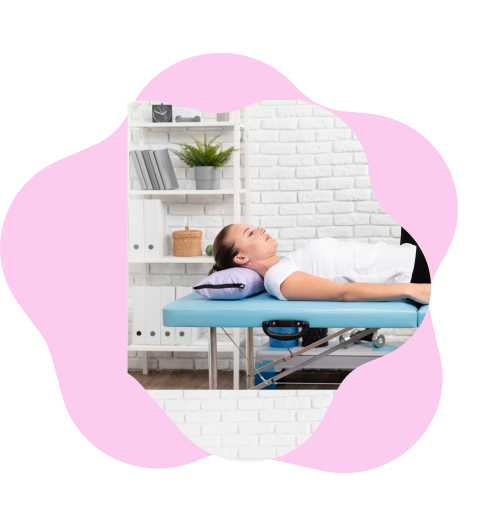
An anterior cruciate ligament (ACL) injury is one of the most common and serious knee injuries in sports. It often occurs during sudden stops, pivots, or awkward landings, especially in football, basketball, skiing, and running. Whether managed surgically or non-surgically, a structured sports physiotherapy rehabilitation plan is essential for safe recovery and return to sport.
This blog explains the stages of sports physiotherapy rehabilitation after an ACL injury, what to expect at each phase, and how physiotherapy helps restore strength, stability, and confidence.
By: MedGo2U Editorial Team
Medical Review Details
Medically Reviewed by: Ken Hong
Reviewed on: Dec 30, 2025
Date Published: Dec 30, 2025
Date Modified: Dec 30, 2025
Understanding an ACL Injury
The ACL is a key ligament that stabilizes the knee during rotational movements and sudden direction changes. An ACL injury can lead to knee instability, swelling, pain, and loss of function.
Research shows that proper rehabilitation is critical to reduce re-injury risk and support long-term knee health (Grindem et al., 2016).
Common causes of ACL injury include:
- Sudden pivoting or cutting
- Landing from a jump incorrectly
- Direct contact during sports
- Weak hip or knee control
Sports physiotherapy focuses on restoring knee stability and whole-body movement patterns.
Why Physiotherapy Is Essential After an ACL Injury
ACL rehabilitation is not just about healing the ligament. It involves retraining muscles, joints, balance, and movement control.
Sports physiotherapy helps with:
- Reducing pain and swelling
- Restoring knee range of motion
- Regaining muscle strength
- Improving balance and coordination
- Preventing re-injury
A well-planned rehab program improves return-to-sport outcomes and knee confidence.
Phase 1: Early Rehabilitation (Weeks 0 to 2)
Goals of This Phase
- Reduce swelling and pain
- Restore knee extension and gentle flexion
- Activate quadriceps muscles
- Improve walking pattern
Physiotherapy Focus
During the early phase, physiotherapists prioritize knee mobility and muscle activation.
Common interventions include:
- Gentle range-of-motion exercises
- Quadriceps activation exercises
- Swelling management strategies
- Gait training
Early movement helps prevent stiffness and muscle shutdown.
Phase 2: Strength and Control (Weeks 3 to 6)
Goals of This Phase
- Improve knee strength
- Restore full range of motion
- Improve control during daily activities
Physiotherapy Focus
This phase introduces progressive strengthening exercises while maintaining knee alignment.
Exercises may include:
- Squats and sit-to-stand exercises
- Step-ups
- Hamstring and glute strengthening
- Core stability exercises
Strengthening surrounding muscles protects the knee during movement.
Phase 3: Advanced Strength and Balance (Weeks 7 to 12)
Goals of This Phase
- Build lower-limb strength
- Improve balance and coordination
- Prepare for higher-level activities
Physiotherapy Focus
Physiotherapists increase exercise difficulty and introduce balance challenges.
This phase may include:
- Single-leg exercises
- Balance and proprioception training
- Controlled lunges
- Low-impact agility drills
Balance training reduces re-injury risk by improving joint awareness (McGuine & Keene, 2006).
Phase 4: Return-to-Running and Sport Preparation (Months 3 to 6)
Goals of This Phase
- Restore power and endurance
- Reintroduce running and agility
- Improve sport-specific movement
Physiotherapy Focus
This phase bridges rehabilitation and sport performance.
Activities may include:
- Gradual return-to-running programs
- Plyometric exercises
- Direction-change drills
- Sport-specific movement training
Physiotherapists monitor knee response closely to avoid overload.
Phase 5: Return to Sport and Injury Prevention (6+ Months)
Goals of This Phase
- Safe return to sport
- Reduce re-injury risk
- Build confidence and performance
Physiotherapy Focus
Final-stage rehab focuses on sport demands and injury prevention.
This includes:
- High-level strength training
- Speed and agility drills
- Jumping and landing mechanics
- Ongoing load management
Studies show that meeting strength and movement criteria reduces ACL re-injury risk (Grindem et al., 2016).
Importance of Individualised Rehab Plans
No two ACL injuries are the same. Factors such as age, sport, fitness level, and surgical decisions influence rehabilitation timelines.
Sports physiotherapists tailor rehab plans based on:
- Progress and pain levels
- Strength symmetry
- Functional testing results
- Sport-specific demands
Personalized rehab improves outcomes and confidence.
Home and Virtual Sports Physiotherapy After ACL Injury
Home and virtual physiotherapy sessions allow consistent guidance without frequent clinic visits.
Benefits include:
- Exercise supervision
- Progress tracking
- Flexible scheduling
Virtual rehabilitation has proven effective for musculoskeletal recovery when guided by professionals (Cottrell et al., 2017).
Mental Recovery After ACL Injury
ACL injuries can affect confidence and mental readiness to return to sport. Physiotherapists support psychological recovery through education, goal setting, and gradual exposure to sport-specific tasks.
Mental readiness is a key factor in successful return to sport.
When to See a Sports Physiotherapist
You should consult a sports physiotherapist if:
- You have had an ACL injury or surgery
- Knee instability persists
- You plan to return to sport
- You want to reduce re-injury risk
Early and ongoing physiotherapy ensures safe recovery.
Conclusion
A structured sports physiotherapy rehab plan after an ACL injury is essential for restoring knee strength, stability, and performance. Through progressive exercises, movement training, and injury prevention strategies, physiotherapy supports a safe return to sport and long-term knee health. Working with a qualified sports physiotherapist improves recovery outcomes and confidence.
If you're looking for a qualified physiotherapist in London, book an appointment with Parth V., a verified HCPC-registered physiotherapist offering home and video consultations across the city.
Frequently Asked Questions
How long does ACL rehabilitation take?
Rehabilitation typically takes 6, 9 months, depending on individual progress.
Can I return to sport without physiotherapy?
Physiotherapy is strongly recommended to reduce re-injury risk and restore function.
Is virtual physiotherapy effective after ACL injury?
Yes. Guided virtual rehab is effective when exercises are properly supervised.
Will my knee ever feel normal again?
Many people return to full activity with proper rehabilitation and prevention strategies.
Join the movement for fair and flexible healthcare
WORK WITH MEDGO2U
Are you a qualified HCPC-registered physiotherapist looking for flexible work across London or the UK? Join MedGo2U and start providing home visits or online consultations at your convenience.
References
- Grindem H et al. (2016). Return-to-sport criteria after ACL reconstruction. British Journal of Sports Medicine.
- McGuine TA & Keene JS. (2006). Balance training and knee injury prevention. Clinical Journal of Sport Medicine.
- van Melick N et al. (2016). Evidence-based ACL rehabilitation guidelines. British Journal of Sports Medicine.
- Cottrell MA et al. (2017). Telerehabilitation effectiveness. Journal of Telemedicine and Telecare.
About the Reviewer
Ken Hong is a Band 6 Physiotherapist working within the Manchester NHS across both ward and community settings. He holds a BSc in Sport and Exercise Science and an MSc in Physiotherapy (Pre-registration) from the University of Birmingham. Ken has strong clinical experience in assessing, diagnosing and treating a wide range of musculoskeletal and post-operative conditions. His background in exercise science enhances his ability to design effective, evidence-based rehabilitation programmes that improve mobility, strength and overall recovery.
Medical Disclaimer
This content is for educational purposes only and does not replace professional medical advice. Always consult a qualified healthcare professional for diagnosis and treatment.
Last medically reviewed on: Dec 30, 2025
Follow us to hear more



Ionela Marinau
Dec 30, 2025 • 12 minutes read