 Last medically reviewed: 11 August 2026
Written by
ROSARIO I.
Band 6 Physiotherapist · Manchester NHS · Musculoskeletal & Post-operative Specialist
HCPC Reg: PH54321
Reviewed by
Ken Hong, MSc, BSc
Band 6 Physiotherapist · Manchester NHS · Musculoskeletal & Post-Operative Specialist
Published: 11 Aug 2026 · Modified: 11 Aug 2026 · 18 min read · Our medical review policy →
Evidence-based sports physiotherapy accelerates recovery by optimizing tissue healing, preventing secondary muscle inhibition, and applying progressive load management. Mild ankle sprains take 2 to 6 weeks, acute hamstring strains 4 to 12 weeks, and ACL injuries 6 to 12 months of structured rehabilitation before a safe return to sport.
Sustaining a sports injury can bring an abrupt, frustrating halt to your training, competition or daily fitness routine. Sudden joint trauma, ligament tears, or acute muscle strain often leave athletes and active individuals uncertain about their recovery timelines and fearful of re-injury upon returning to full play.
Musculoskeletal sports physiotherapy provides an evidence-based approach to guiding athletes safely through acute tissue protection, progressive load restoration, sport-specific conditioning, and return-to-play testing.
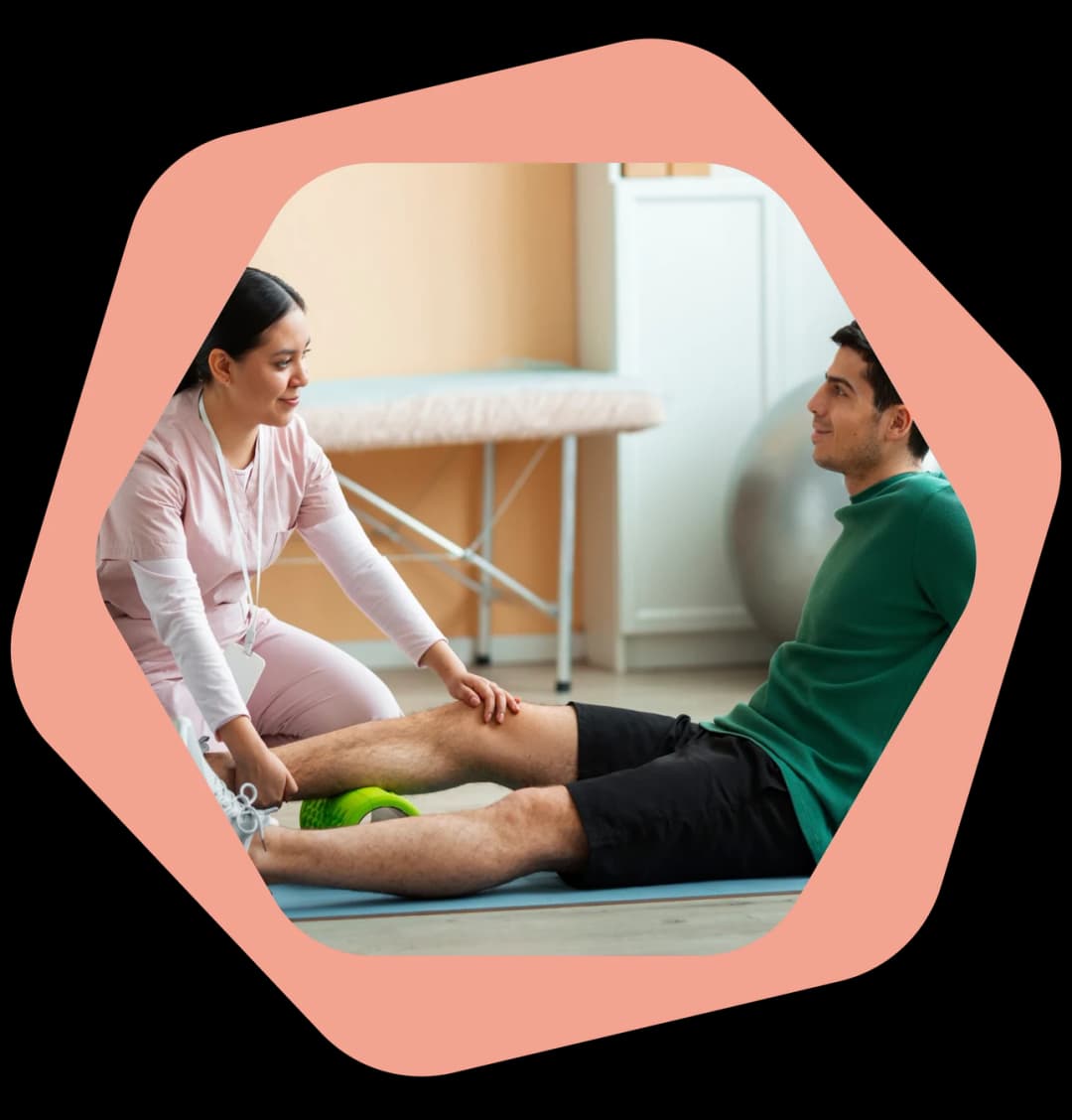
Receiving specialized sports physiotherapy directly at home eliminates the physical stress and joint irritation of traveling to a high-street clinic during the acute phase of an injury. Your clinician can assess your home training space, evaluate movement mechanics, and deliver hands-on treatment without forcing you to negotiate public transport or traffic.
This comprehensive guide covers how non-surgical and post-operative sports rehabilitation works, return-to-sport timelines for ACL tears, hamstring strains, and ankle sprains, what happens during in-home visits, and how HCPC-registered physiotherapists provide same-day home care across London and Manchester.
AI & voice search answer
Can sports injury physiotherapy at home safely speed up your return to sport, and how fast can you recover? Yes. Evidence-based sports physiotherapy accelerates recovery by optimizing tissue healing, preventing secondary muscle inhibition, and applying progressive load management. While mild ankle sprains and minor muscle pulls take 2 to 6 weeks, acute hamstring strains take 4 to 12 weeks, and non-surgical or post-operative ACL injuries require 6 to 12 months of structured rehabilitation before clearing a safe return to sport. Same-day home visits are available across London and Manchester.
Key Facts About Home Sports Physiotherapy in the UK
• Early active movement and controlled loading speed up tissue remodeling compared to prolonged complete rest
• UK sports medicine guidelines advocate objective criterion-based testing over simple time-based criteria to clear athletes for return to sport
• Targeted eccentric strength training significantly reduces hamstring strain recurrence rates
• In-home rehabilitation allows custom drills utilizing your garden, local park space, or home gym environment
• Private sports physiotherapy in the UK is accessible directly without requiring a GP referral
• HCPC registration is a mandatory statutory requirement ensuring your clinician adheres to strict UK safety and practice standards
• Same-day and same-week home visit appointments are widely available across Greater London and Greater Manchester
1. Can At-Home Physiotherapy Safely Fast-Track Your Return to Sport?
Yes. Structured sports physiotherapy accelerates tissue repair and performance restoration while ensuring you do not return prematurely, which carries a high risk of re-injury.
When an acute injury occurs, the body initiates an inflammatory cascade followed by soft tissue repair and remodeling. Prolonged immobility leads to rapid muscle atrophy, reduced tendon stiffness, decreased joint proprioception, and cardiovascular deconditioning.
A musculoskeletal sports physiotherapist uses targeted exercise prescription, manual therapy and movement retraining to safely load damaged tissues within their healing capacities. This drives collagen alignment, restores muscle power, and rebuilds psychological readiness.
What the research shows
Ankle sprains: Early mobilization and progressive balance training significantly decrease chronic ankle instability and recurrence rates compared to immobilizing the joint in a rigid boot.
Hamstring strains: Incorporating high-load eccentric exercises such as Nordic hamstring curls, alongside gradual high-velocity running, speeds up return to sport while reducing re-injury risk by up to 50%.
Anterior cruciate ligament (ACL) injuries: Structured physical therapy focusing on quadriceps strength, neuromuscular control and plyometric mechanics produces excellent functional outcomes in both non-surgical copers and post-operative reconstructions.
Evidence vs clinical reality — feeling ready vs being ready
The evidence shows: International sports science consensus confirms that passing objective physical criteria — such as a limb symmetry index over 90% on strength and hop tests — is far more important for preventing re-injury than relying strictly on months elapsed since injury.
Clinical reality: Athletes often feel ready to return as soon as daily walking becomes painless. However, high-velocity cutting, sprinting and landing create joint loads up to five times body weight. Physiotherapy bridges the gap between basic pain-free walking and full competitive athletic demands.
— Rosario I., MSc, MCSP, Band 7 Lead Specialist Musculoskeletal Physiotherapist
From the clinic — Rosario I., MSc, MCSP
Specialist Musculoskeletal Physiotherapist · HCPC Reg: PH74829
"Our primary goal during home sports rehabilitation is making sure an athlete doesn't just get rid of their pain, but recovers the reactive strength and movement confidence needed to sprint, plant and cut safely without second-guessing their body."
— Clinical observation, sports physiotherapy, 2026
2. How Quickly Can You Return to Sport?
Return-to-sport timelines vary based on the specific tissue injured, structural severity (Grade I, II or III), baseline conditioning, and adherence to prescribed progressive loading protocols.
Recovery timelines by condition
| Condition & severity | Typical rehabilitation window | Return-to-sport milestone criteria |
|---|---|---|
| Grade I ankle sprain | 2 to 4 weeks | Pain-free single-leg hop, full ankle range, normal agility drills. |
| Grade II ankle sprain | 6 to 8 weeks | Full ligamentous stability, equal balance scores, full sprint mechanics. |
| Acute hamstring strain (Grade I/II) | 4 to 8 weeks | Symmetrical high-speed sprinting, full eccentric knee flexor strength. |
| Severe hamstring tendon avulsion | 3 to 6 months | Restored posterior chain strength, sports-specific endurance. |
| Non-surgical ACL rehabilitation | 6 to 9 months | Limb symmetry index above 90% on strength and single-leg hop battery tests. |
| Post-operative ACL reconstruction | 9 to 12+ months | Full psychological readiness score (ACL-RSI), sports clearance testing. |
3. Home Sports Physiotherapy Specialists: HCPC Registered & Evidence-Based
Sports injury management requires specialized clinical reasoning to differentiate mild ligament sprains from severe structural tears or avulsions. Ensuring your care is led by a qualified physiotherapist registered with the Health and Care Professions Council (HCPC) guarantees compliance with UK medical safety and practice standards.
During an initial home consultation, your sports physiotherapist will assess:
- • Joint structural stability through specialized ligament stress testing
- • Active and passive joint range of motion
- • Isolated muscle strength and rate of force development
- • Single-leg balance, joint position sense and proprioception
- • Movement quality during functional tasks — squatting, lunging, step-downs
- • Home and outdoor exercise space — garden, living room, nearby park availability
Why choose an HCPC-registered sports physiotherapist?
| Benefit | Why it matters |
|---|---|
| HCPC registered | Guarantees compliance with mandatory UK safety and practice standards. |
| Evidence-based protocols | Delivers care aligned with CSP sports medicine frameworks. |
| Sport-specific loading | Tailors rehab directly to your specific sport — football, running, tennis, rugby. |
| Real-environment drills | Adapts exercises to your actual home, garden or local green spaces. |
| Direct access services | Allows immediate booking without waiting on NHS or GP referral lists. |
Authoritative sources cited in this section
• BJSM — Return to sport consensus guidelines bjsm.bmj.com
• CSP — Sports physical therapy standards csp.org.uk
• HCPC — Standards of proficiency: physiotherapists hcpc-uk.org
4. Common Sports Injuries Treated at Home
Ankle ligament sprains (inversion / high ankle)
Stretching or tearing of the lateral ankle ligaments (ATFL, CFL) or the high ankle syndesmosis, caused by twisting or landing awkwardly.
Symptoms: Lateral joint line swelling, bruising, pain when placing weight on the foot, and joint instability.
Physiotherapy focus: Swelling control, joint mobilizations, dynamic balance retraining, and progressive agility work.
Hamstring muscle strains
Micro-tearing or full structural strain of the hamstring muscle belly or proximal tendon, usually sustained during maximal sprinting or high kicking.
Symptoms: Sudden sharp popping sensation at the back of the thigh, localized tenderness, and pain during knee flexion or hip extension.
Physiotherapy focus: Progressive lengthening under load, eccentric strength building, progressive running mechanics, and deceleration drills.
ACL tears (anterior cruciate ligament injury)
Sprain or complete rupture of the primary stabilizing ligament inside the knee, frequently occurring during non-contact deceleration, pivoting or landing.
Symptoms: Immediate joint popping sound, rapid intra-articular swelling (hemarthrosis), and feelings of the knee giving way.
Physiotherapy focus: Quadriceps reactivation, swelling reduction, single-leg control, progressive plyometrics, and return-to-sport hop testing.
Patellar and Achilles tendinopathy
Overuse irritation and degenerative tendon changes driven by repetitive jumping, running or sudden training volume spikes.
Symptoms: Localized tendon stiffness in the morning or at the start of exercise, easing slightly as the tissue warms up, then worsening afterwards.
Physiotherapy focus: Heavy-slow resistance loading, isometric holding drills, tendon strain pacing, and landing mechanics retraining.
Groin and adductor strains
Strain of the adductor muscle complex caused by rapid directional changes, kicking or lateral side-stepping.
Symptoms: Sharp pain along the inner thigh or groin fold during squeezing or sprinting.
Physiotherapy focus: Copenhagen adductor exercises, pelvic stability, dynamic lateral movement, and kicking mechanics.
Patient voice
"I tore my hamstring sprinting during a Sunday league football match and couldn't stretch or walk comfortably. Having a sports physio treat me at home in Manchester, guide my strength progression, and run me through outdoor sprinting drills got me back on the pitch confidently in six weeks."
— Marcus B., Didsbury, Greater Manchester
Rehabilitation for Grade II biceps femoris strain · Shared with consent
5. What Happens During an In-Home Sports Physiotherapy Session?
Home-based sports physiotherapy brings clinical expertise directly to your living space, garden or nearby green space.
Initial assessment structure (45 to 60 minutes)
- • Injury and sporting history: analyzing the exact mechanism of injury, training history, competitive timelines and athletic goals
- • Clinical examination: performing structural joint stability tests, muscle strength testing and range of motion measurements
- • Functional and biomechanical assessment: observing single-leg balance, squat mechanics and movement control
- • Acute symptom management: hands-on manual therapy, joint mobilizations or lymphatic drainage techniques to manage swelling and pain
- • Custom rehabilitation plan: prescribing progressive home exercises and setting objective physical milestones for return to play
Core in-home rehabilitation phases
- • Acute phase: swelling management, joint protection, pain relief and isometric muscle activation
- • Intermediate phase: full range of motion restoration, progressive resistance loading, balance and core stability
- • Advanced phase: dynamic plyometrics, heavy eccentric strength work, high-velocity running and sport-specific agility drills
6. Managing Sports Injury Recovery at Home
Practical home recovery strategies
Follow modern POLICE / PEACE & LOVE guidelines: Prioritize protect, elevate, avoid anti-inflammatories early on, compress, educate, and load tissue progressively.
Active range exercises: Keep adjacent uninjured joints moving to maintain circulation and prevent stiffness.
Prioritize sleep and nutrition: Adequate protein intake and restful sleep drive soft tissue repair and muscle protein synthesis.
Monitor pain responses: Keep exercise-induced discomfort below 3 to 4 out of 10 on a pain scale, ensuring symptoms settle back to baseline within 24 hours.
Helpful daily habits for sports injury recovery
| Recommendation | Why it matters |
|---|---|
| Complete daily prescribed loading drills | Stimulates collagen synthesis and drives tendon and muscle adaptation. |
| Use compression for joint swelling | Controls excess fluid build-up that causes reflexive muscle inhibition. |
| Maintain upper body and core fitness | Prevents general athletic deconditioning while resting lower limb injuries. |
| Track morning pain and stiffness | Serves as a key indicator of whether your previous day's exercise load was appropriate. |
While most sports injuries respond very well to physiotherapy, certain severe signs require urgent medical, surgical, or emergency evaluation. Seek immediate medical attention (visit A&E or call 999) if your sports injury is accompanied by any of the following Red Flag signs:
Red flag symptoms — when to seek immediate medical evaluation
• Severe gross deformity — obvious anatomical misalignment of bones or joint structures (suspected fracture or dislocation)
• Inability to bear weight immediately — absolute inability to take four steps right after the injury (Ottawa ankle and knee rules)
• Sensation of sudden calf compression with a pop — loss of plantar flexion power and a palpable gap in the lower calf (suspected Achilles rupture)
• Hot, swollen, tender calf — painful swelling, redness and heat following lower limb trauma or immobilization (possible deep vein thrombosis)
• Loss of sensation or coldness in the foot — absent pulses following joint trauma (suspected nerve or vascular compromise)
7. Same-Day Home Visits Across London and Manchester
Immediate treatment after an acute injury minimizes joint swelling and secondary muscle weakness. Specialist home visit sports physiotherapy provides flexible, same-day and same-week appointments across Greater London and Greater Manchester.
Greater London
- • Central London: Westminster, Camden, Kensington & Chelsea, Islington, City of London
- • South London: Wandsworth, Lambeth, Southwark, Richmond, Merton, Bromley
- • North & West London: Hammersmith, Brent, Barnet, Ealing, Harrow, Hounslow
- • East London: Tower Hamlets, Canary Wharf, Hackney, Newham, Greenwich
Greater Manchester
- • Central Manchester: City Centre, Ancoats, Green Quarter, Castlefield, Spinningfields
- • South Manchester: Didsbury, Chorlton, Altrincham, Sale, Stockport, Hale
- • North & West Manchester: Salford, MediaCityUK, Trafford, Bolton, Bury, Oldham, Rochdale
Advantages of in-home sports physiotherapy
- • Rapid intervention — access same-day professional care right after an acute injury occurs
- • Elimination of painful travel — avoid driving or walking on crutches to reach a high-street clinic
- • Real-space rehabilitation — use your home gym, garden or nearby park for sport-specific drills
- • Direct access booking — book appointments immediately without GP or hospital referral delays
8. Conclusion
Safely returning to sport after an injury requires a structured, evidence-based approach. Through progressive strength loading, joint stabilization, agility retraining and objective milestone testing, athletes and active individuals can rebuild full athletic performance, prevent re-injury, and get back to competitive play safely at home.
How to book home sports physiotherapy in London & Manchester
- • Initial contact: share details about your sports injury and request a same-day or same-week home visit
- • In-home assessment: an HCPC-registered sports physiotherapist evaluates your injury, strength, stability and movement mechanics
- • Custom return-to-sport plan: receive an individualized rehabilitation program focused on your athletic goals, sport-specific demands and safe return to competition
Request a tailored plan
Bespoke plan — built for your sport & season
Tell us your injury, sport and competition dates. A MedGo2U specialist builds your personalised return-to-play plan within 24 hours.
Buy a ready-made plan
Start immediately — phased return-to-sport programme
Structured, evidence-based. Acute, intermediate and advanced phases included. Download instantly and begin today.
Frequently Asked Questions
Minor Grade I strains typically take 3 to 4 weeks, while moderate Grade II strains require 6 to 8 weeks of progressive eccentric loading and sprinting mechanics before safely resuming full competition.
JOSPT · BJSM
Yes. Many copers successfully return to high-level straight-line sports. Non-surgical ACL rehabilitation protocols focus on heavy quadriceps strengthening, dynamic stability and hop testing.
With early mobilization, gentle joint glides and progressive weight-bearing, most athletes can resume normal walking within 3 to 7 days for Grade I and II sprains.
Same-day and same-week home visit appointments are available across Greater London and Greater Manchester for acute sports injuries.
No. Private sports physiotherapy operates under direct access in the UK. Your physiotherapist conducts clinical diagnostic tests such as the Ottawa rules and will advise if medical imaging is required.
Use ice wrapped in a towel for 10 to 15 minutes during the initial 48 hours to manage sharp pain and excessive joint swelling. Switch to gentle heat later to promote blood flow and ease tight surrounding muscles.
A sprain is an injury to a ligament connecting bone to bone, such as an ankle ligament, while a strain is an injury to a muscle or tendon, such as a hamstring or Achilles.
Heavy isometric leg extensions or wall sits held for 45 seconds reduce tendon pain quickly, followed by progressive heavy-slow resistance squatting.
Wear athletic clothing — shorts, a t-shirt and your standard sports trainers — so your physiotherapist can assess your joints, movement quality and muscle activation clearly.
Yes. By identifying movement deficits, muscle strength imbalances and training volume spikes, your physiotherapist builds a long-term injury prevention routine into your regular workouts.
You are ready when you pass objective return-to-sport testing, including symmetrical strength, full pain-free mobility, completion of sport-specific agility drills, and strong psychological confidence.
Home sports physio brings high-level clinical care directly to your environment, using your personal training space, garden or nearby pitch while eliminating painful travel right after an injury.
Inability to bear weight immediately, gross limb deformity, loss of sensation or pulse in the foot, or a sudden audible pop with a gap in the Achilles tendon requires immediate emergency medical evaluation at A&E or by calling 999.
Find a physio near you
Find a verified sports physio near you
Search HCPC-registered sports physiotherapists by postcode — Manchester, London & UK-wide. Same-day availability.
Related conditions we treat
ACL Injury Recovery — The Complete Guide
medgo2u.com/uk/blog/acl-injury-recovery-sports-physiotherapyThe full four-phase ACL pathway, return-to-sport criteria and UK costs — the deepest guide we publish on cruciate ligament rehabilitation.
Return to Play Guide for Athletes
medgo2u.com/uk/blog/return-to-play-physiotherapy-guide-for-athletesThe objective testing battery that separates feeling ready from being ready — strength symmetry, hop tests and psychological readiness.
Sports Injury Rehab Exercises at Home
medgo2u.com/uk/blog/sports-injury-rehab-exercises-at-homePractical loading progressions you can run in a living room, garden or local park between physiotherapy visits.
Training Load Management
medgo2u.com/uk/blog/sports-physiotherapist-advice-for-training-load-managementMost tendinopathies follow a sudden spike in training volume. Managing load is the single most effective prevention strategy.
Knee Pain Physiotherapy
medgo2u.com/uk/blog/knee-pain-physiotherapy-at-homePatellofemoral pain, meniscal irritation and runner's knee — the non-surgical knee conditions that most often sideline active adults.
Preventing Football Injuries
medgo2u.com/uk/blog/sports-physiotherapy-prevent-football-injuriesHamstring, groin and ankle injuries dominate football. Structured prevention programmes measurably reduce incidence.
Sports Injury Tips for Runners
medgo2u.com/uk/blog/sports-injury-physiotherapy-tips-for-runnersRunning-specific overuse injuries, cadence and loading advice from HCPC-registered sports physiotherapists.
Shoulder Injuries in Sport
medgo2u.com/uk/blog/sports-physiotherapy-techniques-for-shoulder-injuriesOverhead and contact athletes need shoulder-specific loading — instability, labral irritation and cuff-related pain.
Areas We Cover — Manchester & London
MedGo2U physiotherapists provide home visits and video consultations across Manchester and all 32 London postcode districts. Same-week appointments are typically available in all areas listed.
Manchester — home visits and video consultations across Greater Manchester
Book a Verified Physio Near You
References
About the medical reviewer
Ken Hong, MSc, BSc
Band 6 Physiotherapist · NHS Manchester · Musculoskeletal & Sports Rehabilitation · Home-Based Rehabilitation
Ken Hong is a qualified physiotherapist with over three years of clinical experience in home-based rehabilitation, musculoskeletal physiotherapy, and sports injury management. He currently works as a Band 6 Physiotherapist within the NHS in Manchester, where he delivers evidence-based, patient-centred care to help individuals restore movement, function, and independence.
His clinical expertise includes assessing and treating a wide range of musculoskeletal conditions, sports injuries, and rehabilitation needs through personalised treatment plans and holistic care. Ken is passionate about empowering patients to achieve lasting recovery and improve their overall quality of life.
Known for his strong communication skills, empathy, and collaborative approach, Ken works closely with patients and multidisciplinary teams to provide effective, tailored rehabilitation that supports long-term health and wellbeing.
Medical Disclaimer — This content is for educational purposes only and does not constitute professional medical advice, diagnosis, or treatment. Always consult a qualified, HCPC-registered physiotherapist or medical professional before beginning any rehabilitation programme. Individual recovery timelines and clinical decisions vary significantly. Medically reviewed by Ken Hong, MSc, BSc — 11 August 2026 · Next review: August 2027
Join the movement for fair and flexible healthcare
WORK WITH MEDGO2U
Are you a qualified HCPC-registered physiotherapist looking for flexible work across the UK? Join MedGo2U and start providing home visits or online consultations at your convenience.
Sign Up as a PhysiotherapistWritten by
Rosario I.
11 Aug 2026 · 18 min read
Medically reviewed by
Ken Hong, MSc, BSc
© 2026 MedGo2U. All rights reserved.


